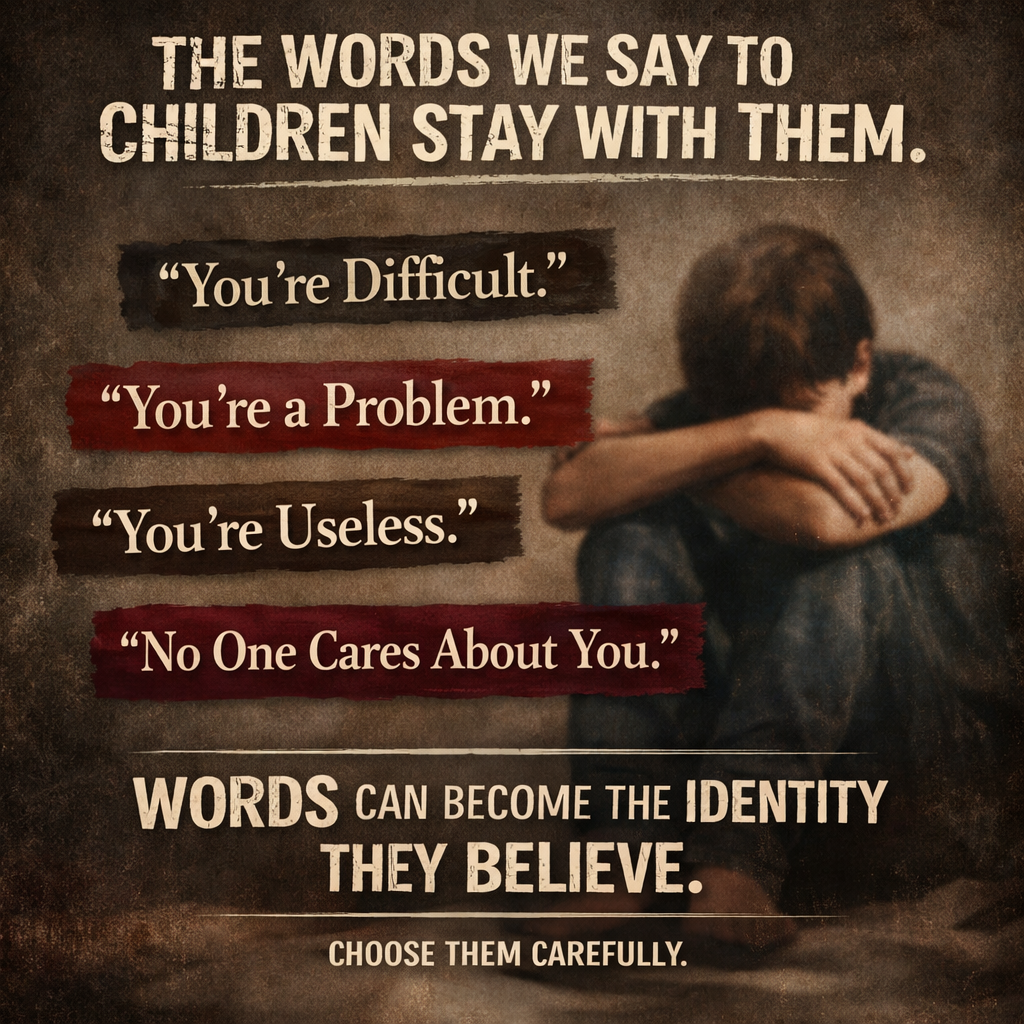
People often say that words cannot hurt you. That they are just words.
But when those words are spoken to a child, especially by the adults who hold authority over their life, they can shape the way that child sees themselves for years to come.
Children do not always have the distance or experience to question what adults say about them. Instead, they often absorb those words and slowly begin to believe them.
I know this because it happened to me.
When I Was 13
When I was 13, I first became involved with social work.
At that age, you are still trying to understand who you are. Your sense of identity is still forming, and the opinions of adults carry enormous weight. Teachers, carers, professionals, and other authority figures are often seen as people who understand the world better than you do.
When those adults describe you in certain ways, it is very easy to accept those descriptions as truth.
During that time in my life, there were certain words and labels that were used about me repeatedly by the adults around me.
They were not said once or twice in passing. They were said often. Sometimes directly to me, sometimes in conversations about me, sometimes in ways that made it very clear how I was seen.
Over time, those words became the way I described myself.
Not because I chose them, but because they had been repeated so often that I believed them.
Words as Part of Abuse
The words that were used were not harmless descriptions. They were part of a wider catalogue of emotional abuse.
Emotional abuse does not always leave visible marks. It often works quietly through language, through repeated criticism, through labels that reduce a child to something negative.
When a child hears the same damaging words again and again those words do not stay on the surface. They sink deeper.
They become part of the way a child understands their own identity.
A child may begin to think:
This must be who I am.
Picture: How I described my self to a social worker age 13

When Labels Become Identity
When you are young and adults repeatedly tell you that you are something , difficult, a problem, a burden, or something worse, it is incredibly difficult not to internalise that.
Children often assume that adults must be right.
So, the words become internalised. They turn into the voice inside your head.
They become the language you use when you think about yourself.
By the time I was a teenager, the way I spoke about myself was shaped almost entirely by what had been said to me by adults.
Those labels had become part of my identity.
The Long Shadow of Words
Even when circumstances change, the impact of those words can last a long time.
They influence confidence. They influence self-worth. They influence the expectations a person has of themselves and their future.
A label given to a child at thirteen can echo well into adulthood.
That is why the way adults speak to children matters so deeply.
Why This Matters
Many adults, particularly professionals working with children, may not realise how much their words can affect the young people they interact with.
But children are listening. They notice how they are described. They notice the labels that are attached to them.
And sometimes those labels follow them far beyond the moment they were first spoken.
Words can shape identity.
They can reinforce harm.
But they can also create space for understanding, growth, and healing.
A Responsibility Adults Cannot Ignore
Adults carry a responsibility when they speak to children, especially children who are already vulnerable.
Words should never be used as weapons.
They should never be used in ways that make a child feel that they themselves are the problem.
Because children do not easily forget what they are told about themselves.
Those words can stay with them for years.
Sometimes for a lifetime.
Leave a Reply